What Happens Between Kickoff and Concepts: The Phase No One Budgets For
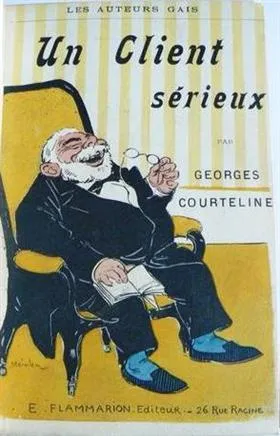
Photo: Théophile Steinlen, Public domain, via Wikimedia Commons
There is a stretch of every branding engagement that never makes it into the portfolio. No deliverables, no reveal, no dramatic before-and-after. It sits between the signed agreement and the first concept presentation — a phase I have come to think of as the murky middle.
From the client's side, this stretch can feel like dead air. Invoices have been paid. A kickoff call has happened. Then, seemingly, silence. Some clients fill that silence with anxiety; a few fill it with doubt about whether they hired the right person. Both reactions miss what is actually happening — and missing it costs them, because the quality of the final identity is often decided here, long before anything is drawn.
The Vending Machine Fallacy
The most common mistake I see is treating design like a vending machine: insert a brief, receive a logo. Under this model, the client's job after kickoff is simply to wait. But identity work is not extraction — it is translation. A designer can only translate what has actually been said, and the written brief, however thorough, is never the whole story.
The brief says the company serves mid-market manufacturers. It does not say that the founder still personally calls every account, or that the sales team quietly resents the word "solutions," or that the current mark survives because one retired co-founder drew it by hand. Those facts live in conversation, in the pause after a question, in the aside a client almost doesn't make.
I worked with a regional food distributor — I will keep them anonymous, as I do with most of these stories — whose rebrand nearly stalled because their written materials described a company of "operational excellence." Nothing false there. But in a third phone call, the operations director mentioned, almost apologetically, that their real pride was that they answered the phone on the second ring. Every driver, every dispatcher, every customer knew it. That single remark reshaped the tone of the entire identity. It would never have appeared on a form.
What to Share in the Murky Middle
If you have commissioned brand work, the phase between kickoff and first concepts is not a holding pattern. It is your highest-leverage window. Three things are worth offering during it.
The inconvenient truths. Every organization has friction it polishes out of its public story — a legacy acquisition nobody mentions, an internal rivalry, a customer segment that quietly funds everything else. Your designer does not need to publish these; your designer needs to design around them. An identity built on the press-release version of a company tends to fit like a suit over armor.
The vocabulary of your people. How do employees describe the business when no one is grading them? Words like "straightforward," " scrappy," "family-run," or "no-nonsense" carry more design information than a page of adjectives in a strategy deck. If your team would never say "innovative," an identity that whispers innovation will always sit slightly wrong.
Access, not just answers. Offer to connect your designer with a longtime customer, a veteran employee, a supplier. Secondhand insight is useful; primary conversation is transformative. Most designers will not ask for this because it feels like an imposition. Make the offer anyway.
What to Ask — and What to Resist
Silence during the middle phase does not mean you should be silent. A good question keeps the work honest without rushing it: "What has surprised you so far?" is better than "Can I see something yet?" The first invites thinking; the second invites premature artifacts.
Equally important is what to resist. The strongest pull in this phase is the urge to solve. Clients send logo sketches, name ideas, color preferences — often excellent instincts, occasionally useful, but presented too early they constrain the exploration the contract was meant to buy. If you have hired for judgment, let the judgment work before the work product appears.
Resist, too, the temptation to fill every quiet week with stakeholder polling. A rebrand that is pre-negotiated with fourteen people before the first concept exists is not a rebrand; it is a referendum on the status quo with extra steps. Consensus gathering has its moment, and it comes after direction is on the table, not before.
Trust Is the Actual Deliverable
Here is the uncomfortable arithmetic of the murky middle: the client who engages openly during it and the client who goes dark often receive deliverables that look superficially similar. Both get a logo, a palette, guidelines. The difference shows up two years later — in whether the identity flexes when the company launches a new division, in whether employees actually use it, in whether the brand feels like the company or like a costume.
The engagements I am proudest of were not the ones with the smoothest timelines. They were the ones where a client said something true in week three that rewrote the brief — and trusted me enough to say it. That trust is not a soft benefit. It is the raw material. Identity design is, in the end, the craft of making a visible thing out of an invisible one, and the invisible thing has to be surrendered voluntarily.
So if you find yourself in that quiet stretch after kickoff, resist the vending machine. Pick up the phone. Say the thing that is not in the brief. The best brand work of your engagement is probably happening right then — it just does not look like work yet.